To encounter the piña vidriada of San José de Gracia is to step into a world where clay makes an impression on memory and where each gesture of the hand carries forward a lineage of care, resilience, and brilliance.
In the Purépecha plateau of Michoacán, where the land rises with a quiet depth, a form emerged that would come to define a community. The piña vidriada, both sculptural and intimate, did not arrive by accident. It was imagined, shaped from a moment deeply rooted in everyday life.

That moment began with Elisa Madrigal Martínez. Walking through the hills in search of firewood for the wood-fired kiln that sustained her family's ceramics practice, she moved through familiar paths and brush. It was there that she noticed a pineapple growing. She picked a single fruit and carried it back home. In that form, she saw something more, a possibility. At a time when it was becoming increasingly difficult to sustain their livelihood through their existing ceramic work, the pineapple offered a new direction.

The creation of the piñas began as a response to that need. A gesture toward survival. From that point forward, the work shifted. The clay required more time, more patience, and a closer attention to detail. Elisa began teaching her family, and what started as an idea became a shared practice. A language formed within the home, shaped by repetition and care.
Her children learned directly from her, carrying the process forward. Over time, these piñas traveled beyond San José de Gracia. They were entered into artisanal competitions, where they were recognized, celebrated, and awarded not only for their intricacy, but for what they represented. Something new, yet deeply connected to place and tradition.
Today, that lineage continues through artisans like Diana Guadalupe Alejos, Elisa’s granddaughter, with whom we have the honor to work. Inside Taller Alejos, the process remains grounded in the same cycles of making. Clay is gathered from nearby lands, then refined, softened, and prepared. The base of the piña is formed and left to rest before the surface begins to take shape.

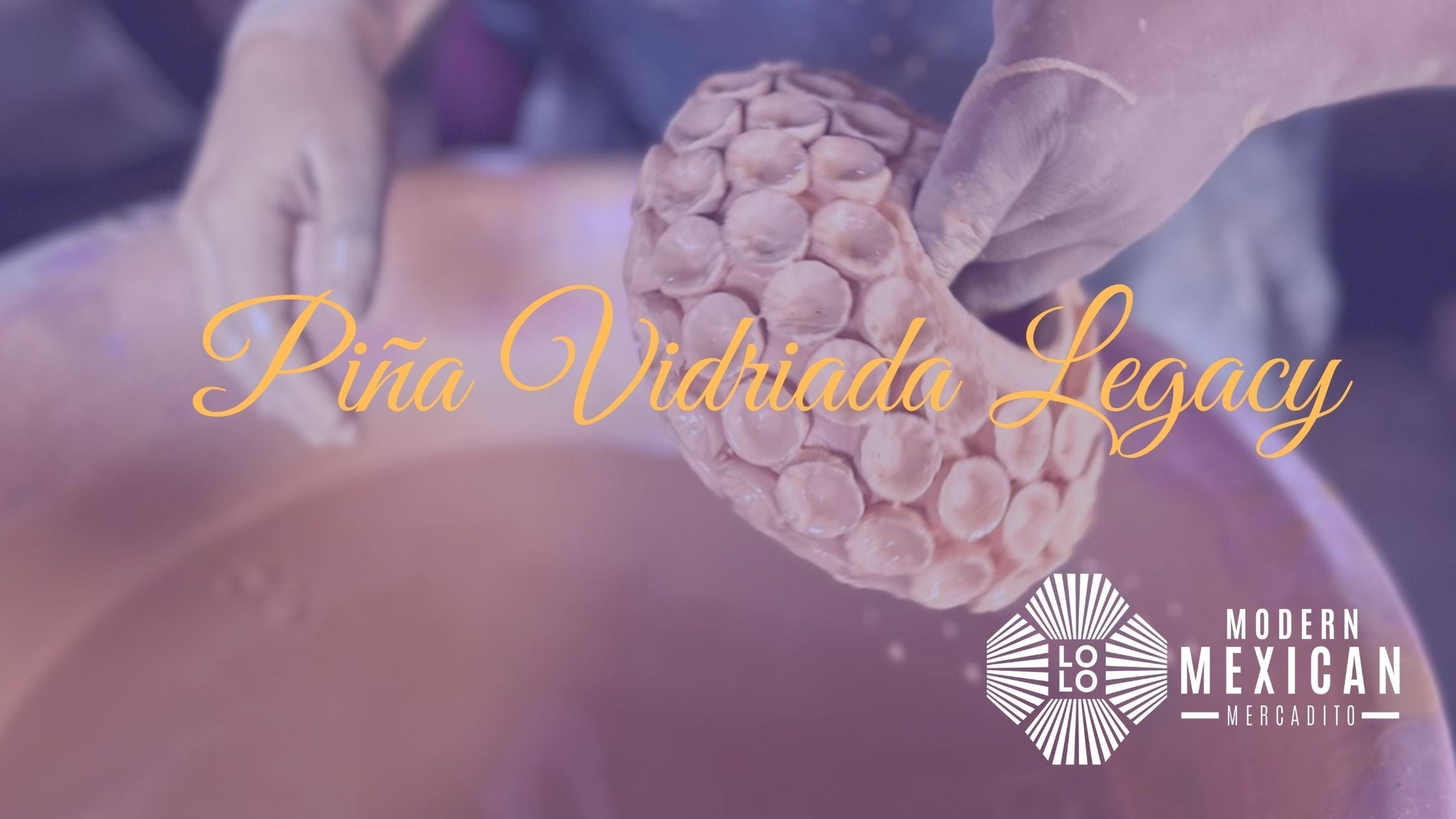
What follows is a slow and deliberate process. Using the technique known as el pellizco, small pieces of clay are pinched and added one by one, covering the entire surface. Each element is shaped by hand, building the texture that defines the piece. This method creates a rhythm: repetitive, precise, and steady. It is through this process that the piña gains its dimension and presence.
A single piece can take days, sometimes weeks, to complete.

Glazing brings another stage of transformation. Layers are applied carefully, first the color, then a luminous finish made from a recipe that has been preserved within the family. The final surface reflects light in a way that enhances the form, giving depth to each detail.
There is also a deep understanding of materials within this work. The combination of barro and tepetate, both shaped by volcanic origins, creates a clay that is strong and responsive. While molds are sometimes used to guide the form, each piña remains distinct through the hand-applied surface.
Beyond the process, the piña carries meaning. It has come to represent abundance, hospitality, and generosity. It is a form that holds space within the home. Present without demanding attention. Some pieces are purely decorative, while others function as vessels or serving forms, such as soperas. They can be made large, reaching over a meter in height, or small enough to rest quietly in a corner.

What remains constant is the connection between land and material, between generations, and between the first gesture of Elisa and the work that continues today.
To bring a piña vidriada into your space is to live alongside that continuity. It is to hold a story shaped over time, carried forward through hands that continue to make, teach, and remember.
By Diana Rodriguez