There are materials that carry memory, and then there are materials that are memory. Papel amate is one of them. From its soft, fibrous surface to the stories painted across it, amate is not simply paper. It is a living archive of México of hands, histories, and worlds that have refused to disappear. Long before European paper arrived, the Mexica and neighboring cultures across México were already recording life in deeply intentional ways. Through painted books known as codices, entire worlds were documented rituals, astronomy, lineage, trade, and daily life. These codices were often made on amate.

Amate comes from the Nahuatl word amatl, meaning paper but its significance reaches far beyond translation. It was a sacred surface, one that held knowledge, ceremony, and power. So important, in fact, that vast quantities were produced as tribute. This was not just paper it was infrastructure for memory.
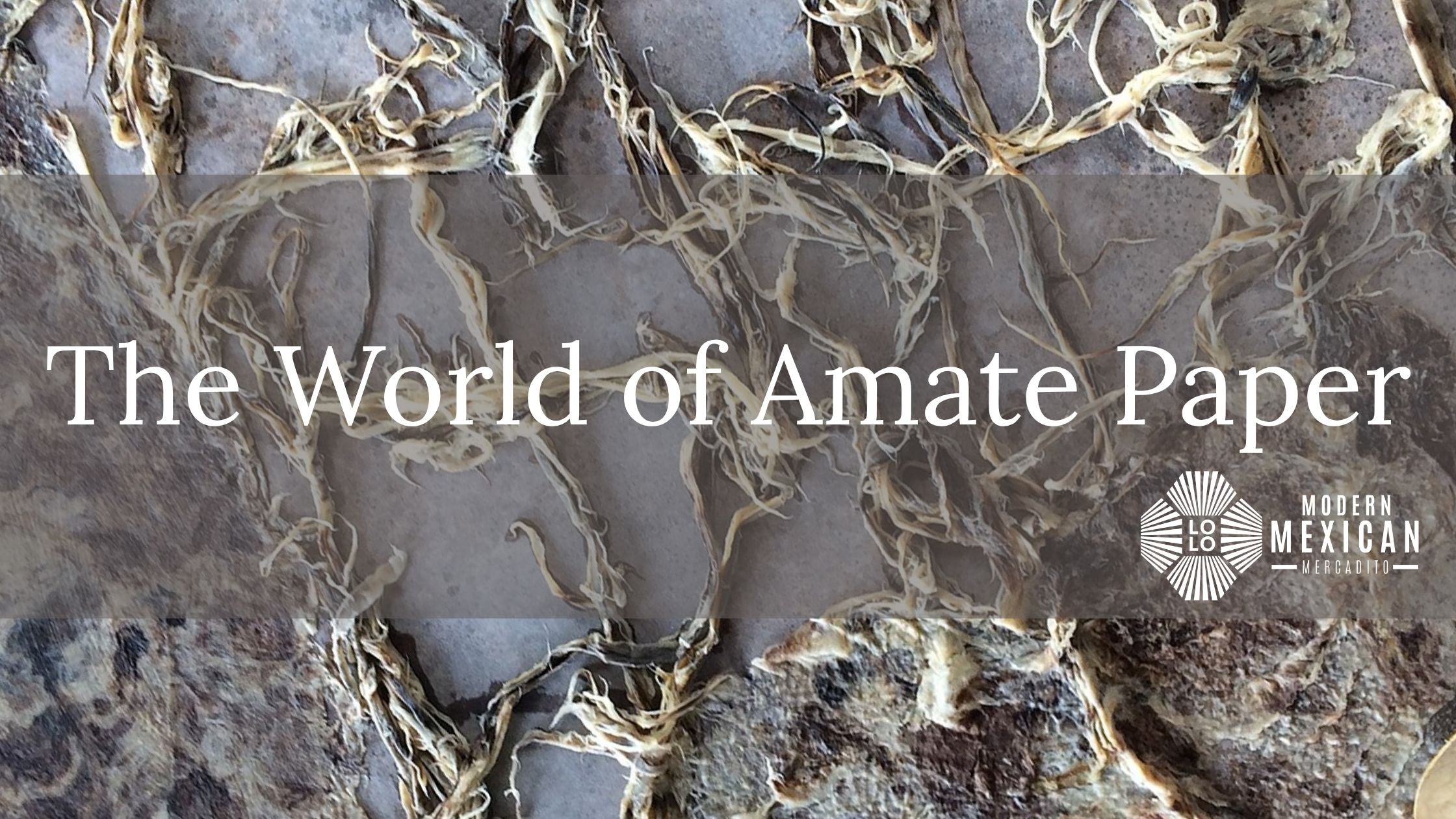
The process of creating amate is as intentional as the stories it carries. It begins with the bark of trees, most commonly ficus or mulberry. The bark is stripped into long fibers, soaked in water, and cooked over fire until it softens. Once ready, these fibers are laid out and carefully beaten with a stone, spreading and interlocking them into a single sheet.
What remains is a paper that breathes textured, organic, and alive with the memory of the tree it came from.
Amate is also a form of resistance. During Spanish colonization, its production was banned. Its deep connection to Indigenous spirituality and knowledge made it dangerous in the eyes of colonial power. But traditions like this do not disappear so easily.
Indigenous communities, especially the Otomí (ñhañhu) people of Puebla and Veracruz, continued making amate in secret. For centuries, it lived quietly: in healing ceremonies, in representations of deities, and in the preservation of cultural identity.
Amate survived because it had to.

Over time, in Guerrero, Nahua artists, communities like Xalitla, began painting directly onto amate paper. What once held codices now held vivid scenes of daily life, ceremonies, flora, fauna, and memory.
Each painting became a continuation of the codex tradition. Reimagined. Creating a new life force through care and awareness of the natural world around.
Some artists preserved visual elements reminiscent of ancient codices, internal and external perspectives with symbolic storytelling. Others explored depth, landscape, and new forms. What remains constant is the intention: to document, to express, and to keep stories alive.
Today, amate paintings are recognized around the world, but their roots remain deeply local, tied to community, family, and place.
At Lolo Mexican Mercadito, we carry pieces that are part of this living tradition, not as decoration alone, but as storytellers.

Our mini storytelling amate paintings are like small windows into everyday life moments of celebration, movement, and community captured in vibrant detail. Works by Colectivo Lázaro echo the spirit of the codices through visual narratives with vivid landscapes meant to be seen, felt, and lived with.
We also carry hand-painted papel amate works from Arte y Artesanías Mauricio in Xalitla, Guerrero. Pieces like the floral and bird compositions, signed by artists such as Rosa, who began painting at just 12 years old, carry a rhythm of nature, color, and careful brushwork layered onto this ancient surface.
When you bring one into your home, you’re not just adding color to a wall. You’re inviting in a story that began long before us and continues through you.
Amate paper reminds us that art is not separate from life. It is made from the land, shaped by hands, protected through struggle, and carried forward through creativity.
A quiet but powerful reminder that stories when cared for never truly disappear.
By Diana Rodriguez