In the living world of textiles, color is not just color. It is memory, land, and time held in fiber. Across Mexico, Indigenous communities have long transformed plants, flowers, seeds, minerals, insects, and earth into luminous dyes, creating textiles that carry generations of knowledge within every thread. These are techniques and knowledge about the land passed down from generation to generation like a story of an ancient color-wheel.


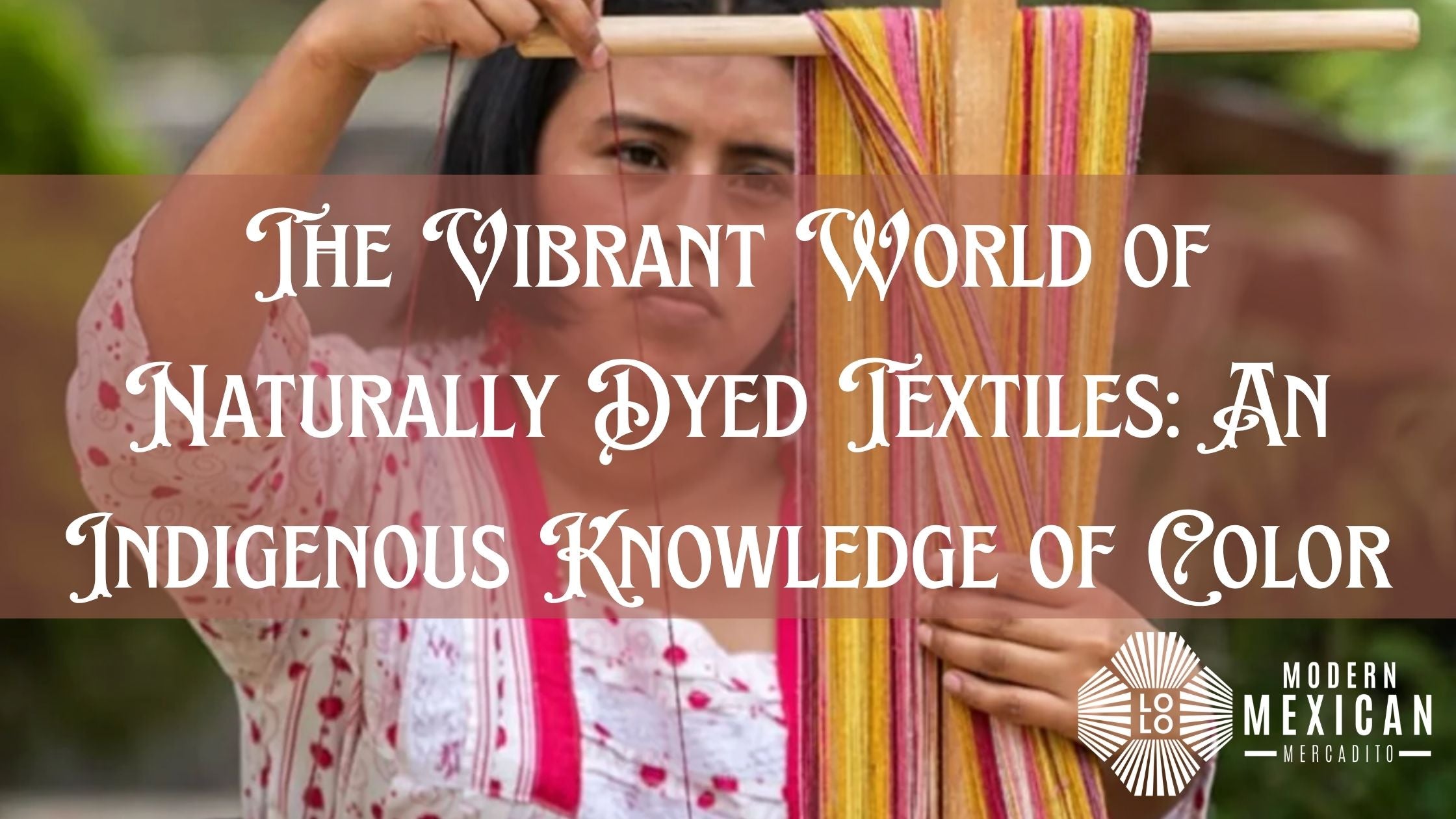
At Lolo, we are honored to share these living traditions. In the mountainous region of Hueyepan, Morelos, a Nahua community continues this legacy through the work of Colectivo Piltontle. Wool becomes a canvas for ancestral memory, woven on backstrap looms with patience, intention, and deep connection to the earth. Every piece reflects a rhythm that has endured across generations guided by sky, soil, and spirit.

We highlight 3 different materials used by Colectivo Piltontle to explain the wonder of these beautiful textiles.

Grana Cochineal
One of the most striking colors in this tradition comes from something small yet powerful: the cochineal insect. Found resting on nopal cactus, this tiny being gives us a deep, vibrant red that has been used for centuries in textiles, codices, and ceremonial art across Mesoamerica.
The process is careful and time-honored. The insects are gently collected from the cactus pads where they live, dried slowly under the sun to preserve their potency, then ground into a fine pigment. When this powder is mixed with water and heat, the color awakens rich, luminous, and full of depth. The shade can shift depending on the mordant used, the temperature of the water, and the intention of the dyer, making each batch unique.

For Nahua communities, this red carries meaning far beyond beauty. Known in Náhuatl as nocheztli, "the blood of the cactus", it speaks of life force, of the sun, of fire, and of the energy that sustains all living things. In ancient Mesoamerica, cochineal was so valued that it became a form of currency and tribute. It was used to dye the robes of nobility, to paint sacred codices, and to mark moments of spiritual significance. This red is not merely a color, it is a connection to ancestral power and the vitality of the earth itself.
When you wear a textile dyed with grana cochineal, you are wearing a color that has traveled through centuries, carrying with it the wisdom of those who first learned to coax such brilliance from a small insect and a humble cactus.

Añil (Indigo)
From the xiquilite plant comes another sacred color: añil, or indigo. Known for its deep, meditative blue often called "Maya Blue". This dye is both artistic and ceremonial. For centuries, indigo has held profound significance across Mesoamerica, used not only to color textiles but to mark spiritual transitions, honor the divine, and connect wearers to the vast expanse of sky and water.
Creating indigo is a transformation that demands patience and reverence. The xiquilite plant is harvested at its peak, then soaked in water where it begins its slow release. Over hours, the liquid shifts and deepens as fermentation unfolds, a natural alchemy guided by temperature, time, and the dyer's intuition. This process is never rushed. Instead, it is accompanied by rituals, whispered intentions, and a deep respect for the plant's gift. The water gradually darkens from green to blue, revealing the hidden color that has always lived within the leaves.

Once the indigo vat reaches its fullness, the fibers are immersed with care. They drink in the color slowly, layer by layer, building depth with each submersion. The blue that emerges is unlike any other rich, grounding, and expansive, like the sky just before nightfall or the depths of a sacred cenote. It carries within it the memory of rain, the vastness of the heavens, and the quiet strength of the earth.
In Nahua tradition, indigo blue represents wisdom, protection, and the connection between the earthly and the divine. It was worn by healers, spiritual leaders, and those who carried knowledge across generations. When you wear a textile dyed with indigo from the xiquilite plant, you wear a color that has witnessed centuries of ceremony, healing, and human connection to the natural world.

Flor de Pericón
Flor de pericón, a type of marigold known in Náhuatl as yauhtli, has long been used as food, medicine, and dye. Its golden hue brings warmth and brightness into textiles, echoing the sun and the earth's abundance.
The flowers are harvested at their peak and dried slowly under the sun, preserving their vibrant essence. Once dried, they are boiled gently to coax out their color. As they steep, the air fills with a fragrant, herbaceous aroma sweet and grounding. The liquid deepens into a golden infusion, carrying the flower's gift. The fibers are then immersed in this warm bath, absorbing a yellow that feels both luminous and earthy, layer by layer.

Pericón is often called the "herb of the clouds," a name that speaks to its clustered blossoms and its ability to bring clarity both visually and spiritually. In traditional Nahua knowledge, this golden yellow represents abundance, warmth, and the nurturing energy of the sun. It connects wearers to the harvest, to growth, and to the generosity of the earth.
When you wear a textile dyed with flor de pericón, you carry the warmth of the sun and the wisdom of those who have long understood the healing and beautifying power of this humble flower.

These dyes are expressions of Indigenous knowledge systems that honor balance, patience, and respect for the natural world. Each hue is the result of time, care, and an understanding of the land.
At Lolo, we invite you to experience these textiles not just as objects, but as living pieces of culture. When you wear them, you carry stories of earth, of community, of hands that have shaped beauty through generations.
Explore the work of Colectivo Piltontle and bring these vibrant, ancestral colors into your everyday life.
By Diana Rodriguez