Mexico is a country where history, nature, music, and community come together through dance. Across its many regions, traditional dances carry stories of the land, the people who cultivate it, and the animals and forces of nature that surround them. In the mountains and valleys of Guerrero, this relationship comes to life through the Danza de los Tlacololeros, a lively and theatrical tradition centered around farmers, agriculture, and the pursuit of a jaguar, known in the dance as el tigre.

The Tlacololeros are deeply connected to the agricultural landscape of Guerrero. The name comes from tlacolol, a word associated with the clearing and preparation of sloping mountain land for cultivation. These are places where generations of farmers have worked the earth to grow crops such as corn, beans, and squash. Through dance, this world of planting, harvesting, animals, and changing seasons is transformed into a story filled with music, movement, humor, and dramatic characters.
At the center of that story is the jaguar.
For generations, the jaguar has held a powerful place in the landscapes and imaginations of communities throughout southern Mexico. In the Danza de los Tlacololeros, el tigre becomes a wild and disruptive presence, threatening the fields and bringing chaos to the community. The farmers follow its trail, confront it, and attempt to capture it, creating a performance that moves between agricultural life, theater, and celebration.
The tradition is particularly associated with the central region of Guerrero and communities around Chilpancingo and Chichihualco. It is also performed in places such as Tixtla, Apango, Mochitlán, Zumpango, Tecoanapa, Ayutla, Zitlala, Chilapa, and other surrounding communities. Like many traditions that have been carried from one generation to the next, the dance is not performed in exactly the same way everywhere. Each community brings its own details to the masks, costumes, characters, and celebrations surrounding the dance.
In Chichihualco, one of the communities most closely associated with the tradition, the Tlacololeros are traditionally performed on May 3 for Día de la Santa Cruz, a date closely connected to the agricultural calendar and the hope for a fruitful growing season. The dance returns again on September 28 and 29 during the celebration of San Miguel Arcángel, the town's patron saint. These celebrations bring together music, dance, faith, and community, allowing the Tlacololeros to remain part of the rhythm of the year as well as a living expression of local identity.
In other parts of Guerrero, the dance may also appear during major religious and community celebrations. In Chilpancingo, for example, the Tlacololeros have been associated with Holy Week, May 3, the Festival of San Mateo in September, December 12 for the Virgen de Guadalupe, and December 24 on Nochebuena. This variation from town to town is part of what makes the tradition so rich. There is no single calendar that defines every performance. Instead, the Tlacololeros move with the local traditions, patron saint festivities, and celebrations of the communities that continue to keep the dance alive.

Traditionally, the troupe includes a group of Tlacololeros whose names reflect the agricultural world surrounding them. Among the characters are El Maizo, El Salvador, El Tlacololero, El Tepachero, El Tecorralero, El Teyolero, El Jitomatero, El Chile Verde, El Ventarrón, El Rayo Seco, El Colmenero, El Frijolero, El Xocouotillo, and La Perra Maravilla, along with the unforgettable tigre. Together, they create a lively portrait of the people, crops, animals, and forces of nature that shape life in the countryside.
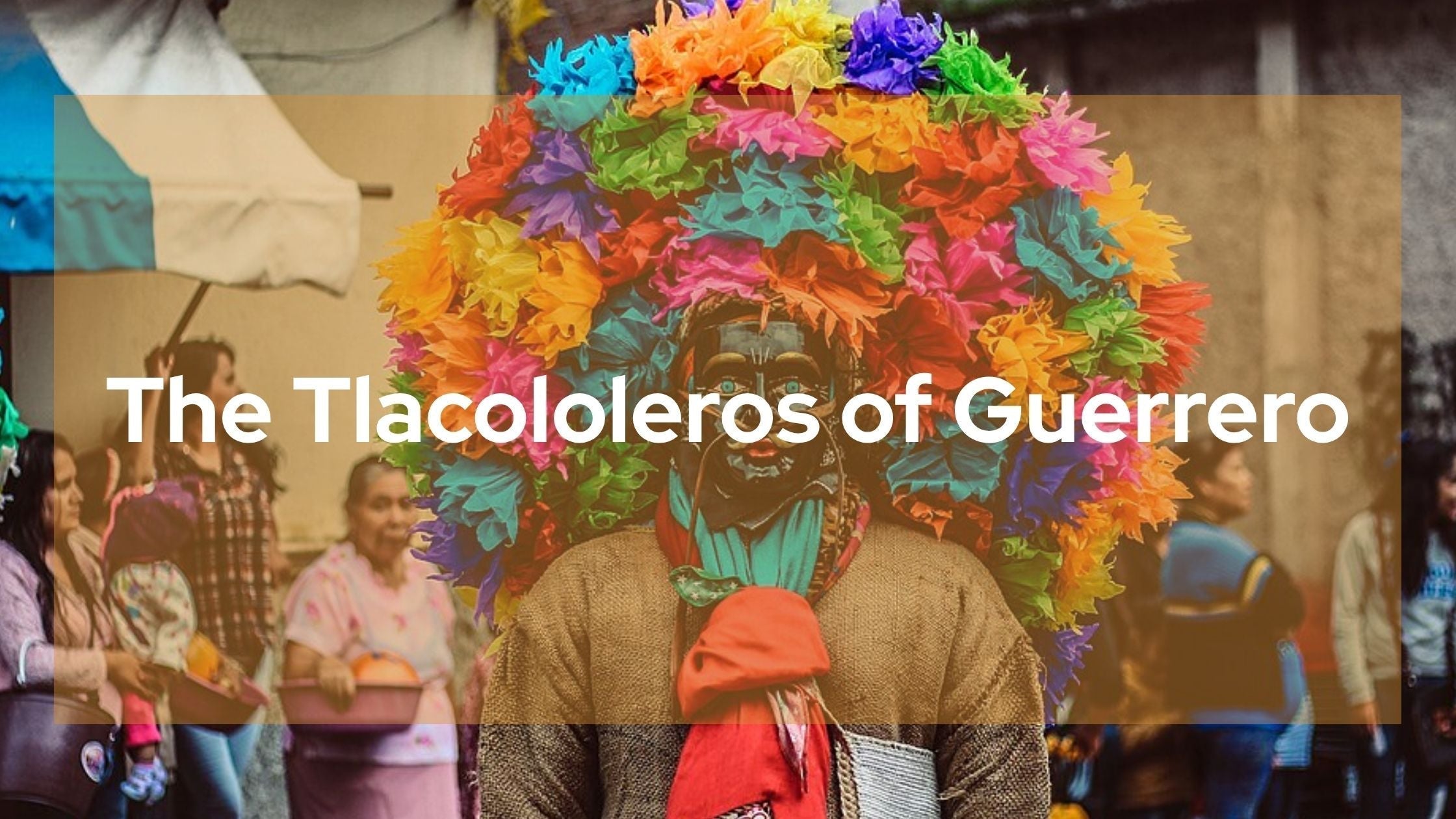
One of the most recognizable elements of the Tlacololeros is their clothing. Dancers wear large palm hats made from xoyate, sometimes decorated with flowers such as cempasúchil or colorful paliacates. Their costumes may include jute fabric, an ixtle belt, leather elements, and sturdy footwear. They also carry a chirrión, a whip whose sharp crack becomes part of the rhythm and energy of the performance.
And then there are the masks.
Tlacololero masks are among the most expressive elements of the tradition. Often carved from woods such as parota, colorín, or zompantle, they can depict exaggerated human faces painted in bold colors. Some communities create darker faces, while others feature red, white, gray, or brightly painted expressions. The differences between towns are part of what makes these masks so fascinating. Each one gives life to a character while also reflecting the artistic language of the community where it was created.
The Tlacololeros also belong to a larger landscape of jaguar and tecuán dance traditions found throughout southern Mexico. Across Guerrero, Oaxaca, Chiapas, and neighboring regions, Indigenous communities have developed different performances involving jaguars, hunters, farmers, and animal characters. These traditions are not identical, but many share a deep interest in the relationship between people, animals, agriculture, and the natural world.

In Guerrero, the Tlacololeros continue to bring this relationship into the present. What begins with the work of preparing the land and planting a crop becomes a story of pursuit, danger, humor, and celebration. Farmers become performers, the jaguar becomes a character, carved masks become expressive faces, and the sharp sound of the chirrión fills the streets alongside the music of the flute and drum.
Like so many traditions throughout Mexico, the beauty of the Tlacololeros is found not only in what we see, but in what the performance carries with it: memories of agricultural life, local creativity, community identity, and a lasting relationship with the land.
By Diana Rodriguez