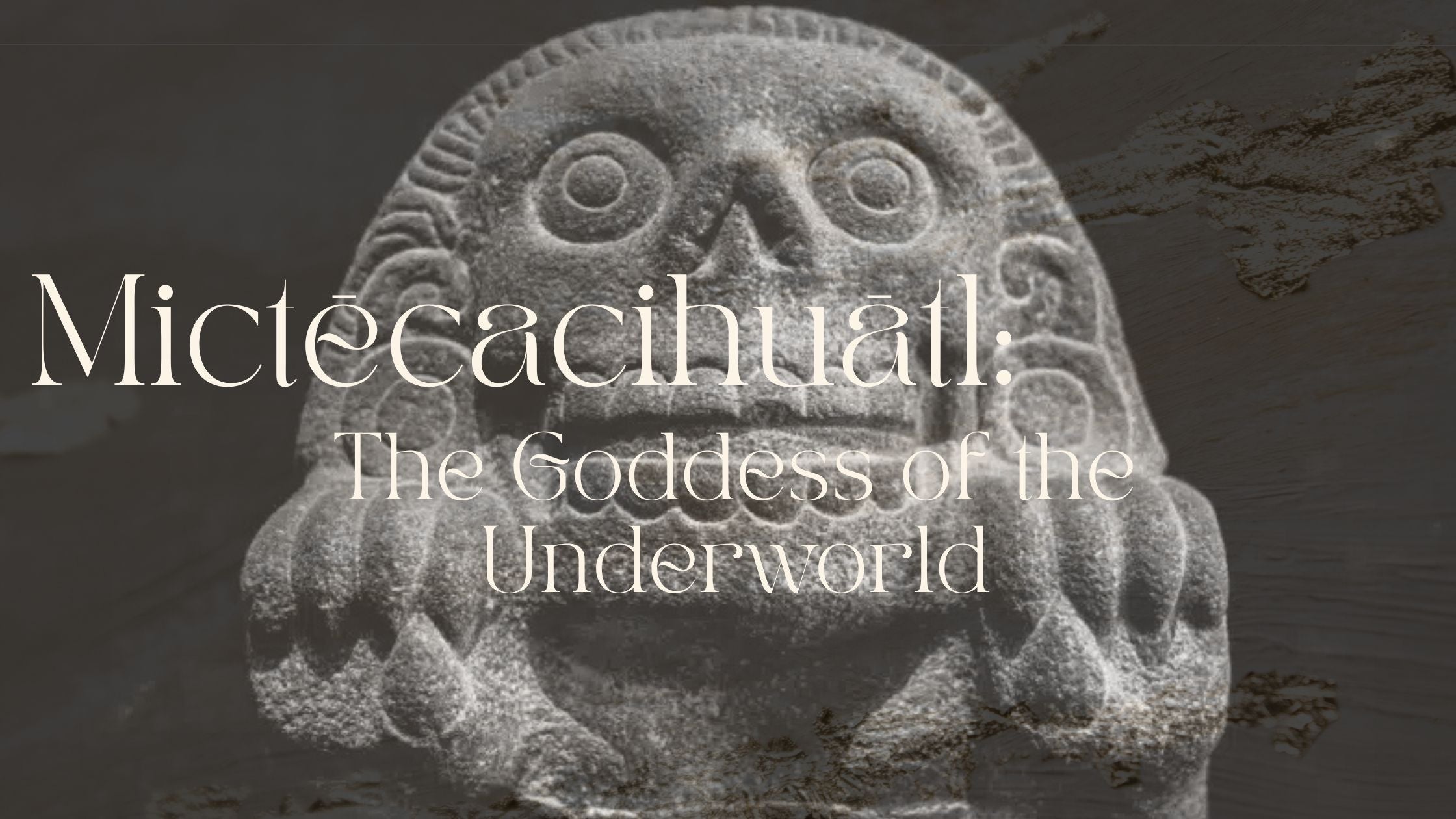
Within the sacred world of the Mexica, Mictēcacihuātl presided over death, memory, and the realm beyond life. Known in Nahuatl as the “Lady of the Dead,” she ruled alongside her husband, Mictlāntēcutli, over Mictlán, the underworld, the place where many souls began their journey after death.

Mictēcacihuātl as depicted in the Codex Borgia
Her story reminds us that, in the worldview of ancient central Mexico, death was not simply understood as an ending. It was part of a larger cycle of transformation, movement, and continuation.
Mictēcacihuātl watched over the bones of the dead and presided over ancient ceremonies honoring those who had passed. In the Mexica world, bones were more than what remained after life. They carried ancestry, memory, and the possibility of renewal. This understanding appears in a Mexica creation story in which the gods journey to Mictlán to retrieve the bones of earlier generations, using them in the creation of humanity.
Her presence reflects a deeper Mexica understanding of existence, where what remains from one generation can become part of another, carrying memory forward through the endless cycles of the earth.
She ruled Mictlán together with Mictlāntēcutli, one of the most significant deities associated with death in the Mexica world. Mictlán was a destination for many of the dead, but ancient Nahua beliefs about the afterlife were more complex than the idea of a single heaven or underworld. The destination of a person after death could depend on the manner in which they died.
Those associated with certain forms of death could journey to different sacred realms. Some who died in battle or sacrifice were connected to the realm of the Sun, while those whose deaths were associated with water, storms, or particular illnesses could go to Tlalocan, the realm of Tlaloc. Others entered the journey toward Mictlán.
Death did not necessarily mean that a person simply disappeared. Instead, it was understood as a transformation and a continuation into another role or destination. The world of the living and the world of the dead were connected through the movements of the gods, the earth, the elements, and the cycles that shaped existence.

Mictēcacihuātl is often represented with imagery that can feel striking to modern viewers. She may appear with a skeletal or defleshed body, a skull-like face, and an open jaw. Her open mouth has been associated with the image of swallowing the stars as they disappear from view during the day. Other representations include a skirt made of serpents and ritual imagery across her body and face.
These representations should not simply be understood as symbols of horror. In Mesoamerican visual traditions, the body, bones, skulls, and the earth were deeply connected to cycles of life, death, sacrifice, fertility, and renewal. Death and life were not always imagined as complete opposites, but as forces existing in constant relationship with one another.
Very little is known today about the temples dedicated specifically to Mictēcacihuātl, but one important reference appears in the Florentine Codex, a sixteenth-century record of Nahua life and traditions. It mentions a temple connected to her called Tlalxicco, a Nahuatl name often translated as “In the Navel of the Earth.” Although we do not have a detailed description or surviving image of the temple, its name gives us a glimpse into how sacred the earth itself was within the Mexica worldview.
The idea of the earth as a “navel” suggests a place of connection, where different parts of existence meet. For the Mexica, the earth was not simply the ground beneath us. It was a living and sacred part of the world, connected to the gods, ancestors, the natural environment, and the cycles of life and death. Mictēcacihuātl's association with this sacred place helps us understand her not only as a goddess of the dead, but as part of a larger worldview in which death, the earth, and renewal were deeply connected.

Today, Mictēcacihuātl is often discussed in relation to Día de los Muertos. There are important connections between ancient Indigenous traditions honoring the dead and the development of contemporary practices of remembrance. At the same time, Día de los Muertos as it is celebrated today was shaped over centuries through the meeting and transformation of Indigenous traditions and Spanish Catholic practices.
This history reminds us that traditions are not frozen in time. They continue to change, adapt, and carry memories from different generations. Mictēcacihuātl remains an important figure through which we can think about ancestry, remembrance, and the ways cultures continue to honor those who came before.
Her story invites us to look beyond the fear often associated with death and consider it as part of the larger movement of existence. For the ancient Nahuas, the world was shaped by cycles and transformation. Life changed into death, death returned to the earth, and from the earth new life could emerge.
Mictēcacihuātl stands within this cycle as a guardian of what remains. The bones she watches over carry the memory of those who came before. They remind us that the dead remain part of the stories, places, families, and traditions that continue to shape the living.
To remember the dead is also to remember where we come from.
In this way, Mictēcacihuātl can be understood not only as the Lady of the Dead, but as a figure connected to memory, ancestry, and transformation. Her story asks us to see life and death not as separate worlds, but as part of a cycle that continues to move through the earth, through generations, and through time.
At LOLO Mexican Mercadito, we believe that learning about Mexico's history and cultural traditions helps us better understand the richness and complexity behind the practices we continue to celebrate today. Figures like Mictēcacihuātl remind us that Mexico's relationship with remembrance has deep roots, carrying stories that continue to transform across generations.
By Diana Rodriguez