In Oaxaca, there are traditions that continue to illuminate life in quiet and meaningful ways. Some are held in music, some in textiles, and others in light itself. In Teotitlán del Valle, the tradition of beeswax candle making remains an important part of community life woven into ceremonies, celebrations, and moments of remembrance.

For generations, these elaborate candles have been created for weddings, religious festivals, sacred rituals, and Day of the Dead altars. They symbolize abundance, prosperity, and the hope carried into new beginnings. Within Zapotec communities, beeswax candles hold profound spiritual and social significance that extends far beyond decoration. They are vessels of intention, used to mark life's most sacred moments and to honor the bonds that hold families and communities together.
One of the most meaningful traditions connected to these candles takes place during Zapotec marriage proposals, where family members and elders gather carrying candles as an offering to a bride's parents. It is a gesture of respect, union, and blessings for the future couple. This practice reflects the deep reverence Zapotec culture holds for commitment and family alliance. The candles themselves become witnesses to the promise being made, their light symbolizing the illumination that a new union brings to both families.

Beyond marriage, beeswax candles remain central to religious observances and seasonal celebrations throughout the year. During Día de Muertos, families light these candles on altars to guide the spirits of loved ones home, creating a bridge between the living and those who have passed. The warm glow of beeswax, softer and more natural than other materials. Believed to carry prayers and remembrance with greater authenticity. In religious processions and feast days honoring patron saints, entire communities process with candles held high, their collective light becoming a form of collective prayer and devotion.
The tradition also speaks to the Zapotec understanding of abundance and reciprocity. When candles are offered as gifts during important life events, they represent not just a material offering but a commitment to support and witness one another through life's transitions. This exchange reinforces the interdependence that holds Zapotec communities together, reminding each person that they are part of something larger than themselves.
In the heart of Teotitlán del Valle, Colectivo Develun sisters Itze Álvarez and Maritza Álvarez, continue this tradition with deep care. Their work is rooted in preserving the knowledge passed down through generations while honoring the sacred role these candles hold within their community.
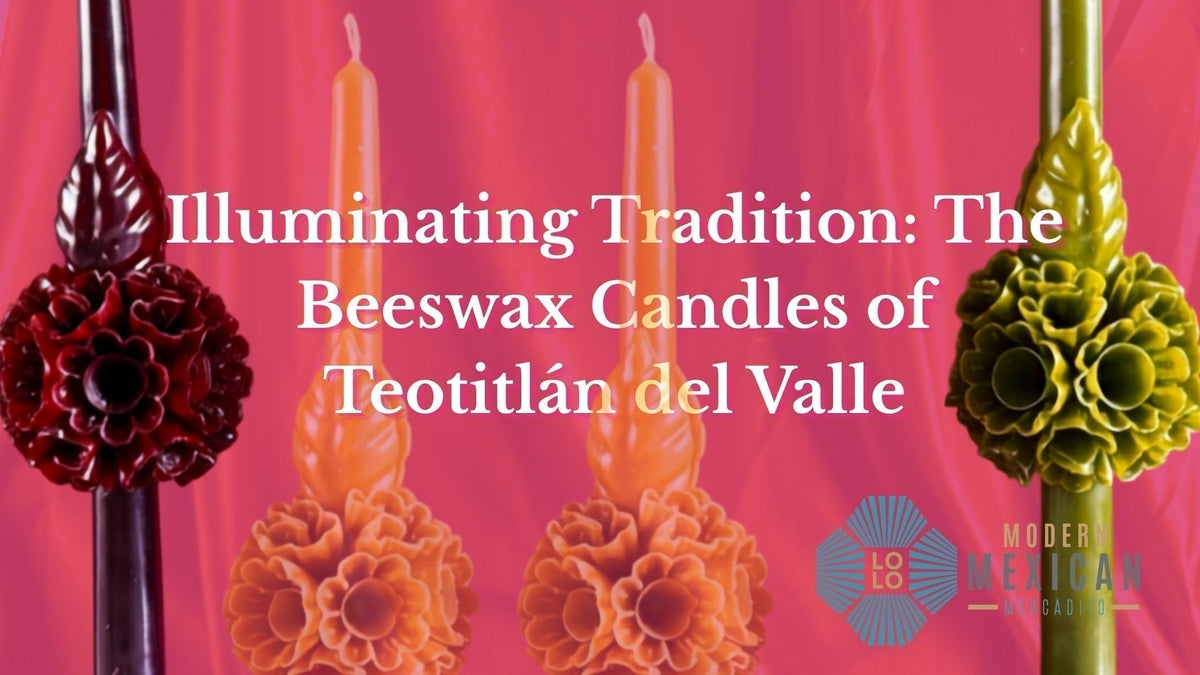
The process itself requires patience and devotion. Beeswax is carefully melted, dyed, poured into wooden molds, and cooled with water. These molds are often made from wood or clay, tools that have long been used within the community. In older generations, artisans also used seashells to shape smaller decorative floral pieces, allowing natural materials to become part of the process itself. Once the wax begins to cool, each detail is shaped. Each step feels intentional, almost ceremonial. Delicate flowers are then shaped by hand and applied one by one. Birds, fruits, roses, lilies, and intricate ruffles emerge from the wax, transforming each candle into something both intimate and monumental.


Traditional velas de concha are especially recognized for their detailed floral arrangements and beeswax fruit placed at the center of each piece. Many of the flowers are inspired by the natural world surrounding the community, marigolds, roses, and lilies that bloom in the valleys and gardens of Oaxaca, each one carefully recreated in wax by hand.
Some candles also go through a process known as blanqueado, a technique that transforms the candle's appearance through patience and natural elements. The wax is placed beneath the sun for weeks, exposed to the warmth and light that bleaches it gradually into a soft, luminous white tone. This is not a rushed process, it cannot be hurried or forced. Instead, it unfolds slowly, day after day, as the sun does its gentle work. The artisans understand that this transformation is a collaboration between human intention and natural forces. The sun becomes a partner in the creation, participating in the making of each piece.
This practice reflects a deeper philosophy within the craft that the most beautiful and meaningful objects are those created in harmony with nature's rhythms. By allowing the sun to bleach the wax naturally, the artisans honor both the material and the environment from which it comes. The resulting candles carry not just the marks of human hands, but the imprint of time, sunlight, and the natural world itself. Each white candle becomes a testament to patience, to trust in natural processes, and to the belief that some of the most profound transformations cannot be rushed.

Every candle can take several days to complete, and each one carries more than beauty. It carries memory, ceremony, and the hands of generations who continue to keep this Zapotec tradition alive. Through their work, the sisters of Colectivo Develun remind us that light can be more than illumination, it can be an offering, a celebration, and a way of honoring those who came before us.
Creating a Sacred Presence During Día de Muertos
Among all the occasions these candles illuminate, Día de Muertos holds a particularly profound place in their purpose. During this sacred time, families create altars, ofrendas to welcome the spirits of loved ones who have passed. The beeswax candles of Teotitlán del Valle become essential elements of these altars, their warm, natural glow serving as a beacon to guide souls home.
The choice of beeswax is never accidental. Unlike paraffin or other synthetic materials, beeswax burns with a softer, more golden light that many believe carries prayers and remembrance with greater authenticity and spiritual resonance. The honey-like scent that rises as the candle burns adds another layer of sensory connection, a fragrance that feels alive and natural, honoring the deceased with something genuine rather than artificial.

During Día de Muertos, families often select candles that reflect the personality or preferences of those they are remembering. A candle adorned with roses might honor a grandmother who loved flowers. One decorated with birds could represent a loved one's free spirit. The elaborate floral designs and hand-shaped details transform each candle into a personalized tribute, making the altar not just a place of remembrance but a gallery of individual stories and connections.
The artisans of Colectivo Develun understand this sacred responsibility deeply. When they shape each flower, apply each fruit, and carefully pour the wax, they are creating vessels meant to hold the love and memory of families. During Día de Muertos season, their work takes on even greater significance, these candles become the physical manifestation of the bridge between worlds, the tangible expression of devotion that families place on their altars to say: You are remembered. You are honored. You are home.
By Diana Rodriguez