
In the heart of Michoacán, where the lake meets the mountains and the land carries a quiet depth, there is a people who call themselves P’urhépecha, or Purepecha. The word translates simply to “people,” but it holds something much deeper, an affirmation of existence, identity, and continuity. It is a way of saying we are still here, rooted in place, in language, and in a way of life that has endured across centuries.

For a long time, they were called “Tarascos,” a name imposed from the outside during colonization. But that is not who they are. P’urhépecha is the name they have always known themselves by, and in that naming there is dignity, memory, and presence.
Their world extends across the lake regions, plateaus, and mountains of central Michoacán, places like Pátzcuaro, Paracho, Tzintzuntzan, Huancito Chilchoata and Zinapécuaro. Communities that feel both grounded and alive, where traditions are not preserved as something distant, but lived every day. Homes are often close together, families interconnected, and life moves with a rhythm shaped by land, work, and shared knowledge.


One of the most striking things about the P’urhépecha is their language. It does not closely relate to any other Indigenous language in México. It exists on its own, carrying a worldview that is uniquely theirs. Though the number of speakers declined over time, there has been a steady and powerful effort to strengthen and preserve it, through education, community work, and a deep commitment to keeping it alive for future generations.

Long before colonization, the P’urhépecha built one of the most sophisticated civilizations in Mesoamerica. They were known for their knowledge of metallurgy, especially in copper and gold, and for a strong political and social structure that allowed them to remain independent, even as other regions fell under Mexica control.
Their understanding of the world was not only practical, but spiritual. Their origin stories begin in the sky and continue on earth. Their deities are tied to the elements that shape life itself, as well as the sun, the moon, the rain, the fire, the earth. The world is not separate from the sacred; it is part of it. You feel that connection in the way they work with materials, in the way they understand creation as something collaborative between human hands and the forces of nature.
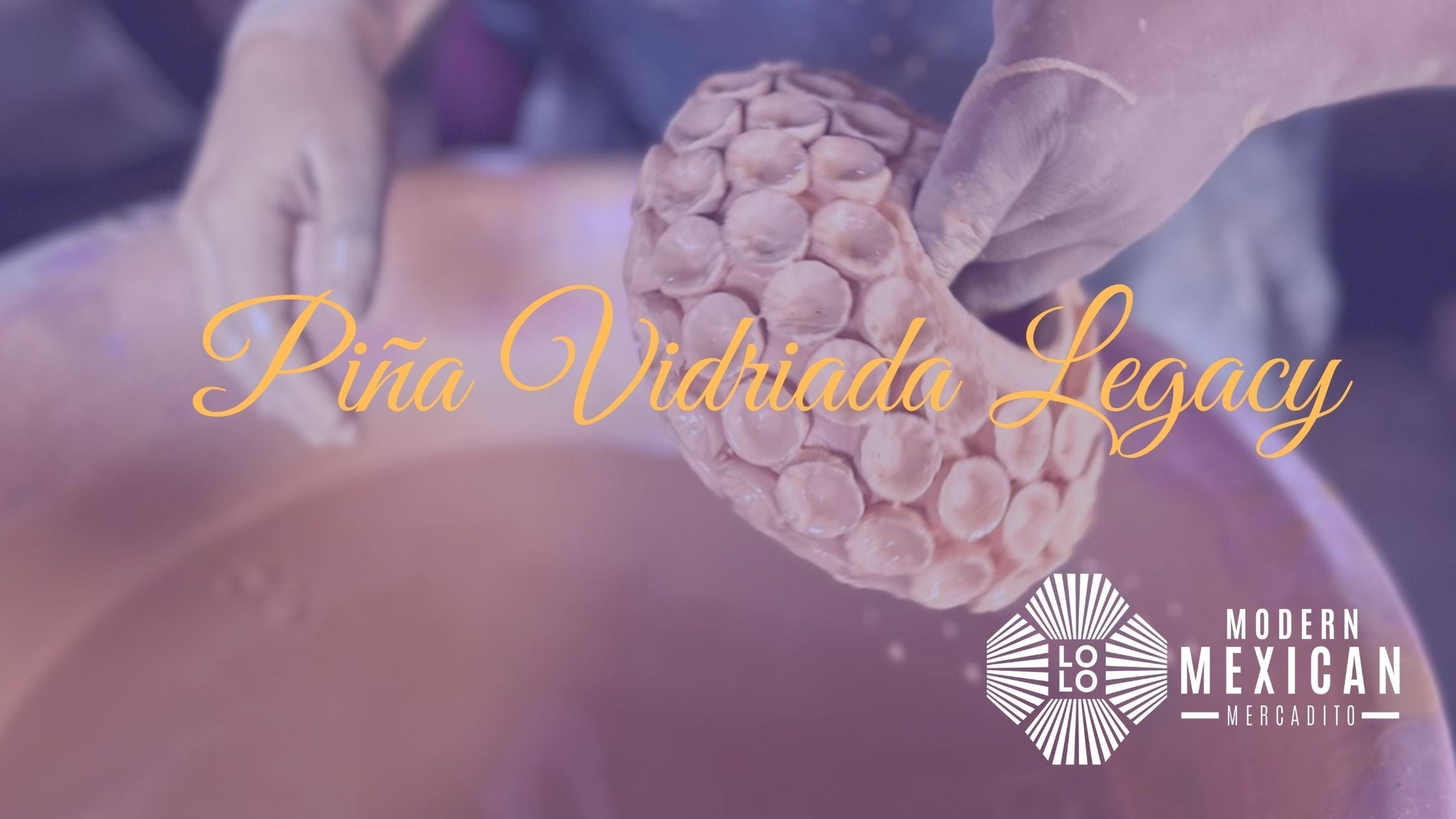
In Michoacán, that relationship to earth and fire becomes especially visible through clay. In towns like Zinapécuaro, artisans continue shaping barro in ways that feel both ancient and immediate. The process is slow, intentionally formed by hand, dried, fired, and often finished with that signature glaze that gives barro vidriado its soft shine and depth of color.
These are not just objects made for display. They are meant to be used to hold food, to gather around, to become part of daily rituals. A cazuela on the stove, a plate at the table, a vessel holding something warm. They carry a certain weight, not just physically, but in what they represent: continuity, care, and a relationship to making that resists speed and excess.
What feels most important to understand is that the P’urhépecha are not a culture of the past. They are present. In their language, in their communities, in their work, in the way traditions continue to be passed from one generation to the next.

At Lolo Mexican Mercadito, the pieces we carry from Michoacán come from within this living world. From Barro Vidriado shaped in regions like San Jose de Gracia Tangancicuaro, displays of the Zinapécuaro Negative Imprint, elaborated Patamban pottery made by Victor at Taller Contreras, or the incredible Huancito ceramics vessels made with the rama bruñida technique by Taller Felipe. Each piece carries something of that landscape, history, and way of understanding life.

To bring one of these pieces into your home is to invite in something grounded to history of the Earth. Something that has been shaped by hand, by fire, by time. Something that connects you, even in a small way, to the people and places where it was made.
There is a strength in P’urhépecha culture. Enduring throughout time. It lives in the language that continues to be spoken, in the clay that continues to be shaped, in the stories that continue to be told without needing to announce themselves.
And in that quiet continuance, there is something deeply powerful, something that reminds us that tradition is not something that disappears. It transforms, it adapts, and above all, it lives.
Make sure to check out this exquisite collection and feel the immense spirit of the Michoacán Artisans
By Diana Rodriguez