In Zinapécuaro, Michoacán, an extraordinary tradition continues to unfold, one shaped by fire, clay, and memory. At Taller Solís, artisan Fernando Solís carries forward a technique that has traveled across centuries: the negative imprint.

This method is subtle, yet powerful. Instead of adding color to create a design, it works through absence, where pigment is removed or resisted, and the image reveals itself through what is left behind. It is a quiet transformation, where forms emerge from contrast, from patience, from knowing when not to intervene.
A technique rooted in ancestral knowledge as the negative imprint technique has long been present across Mesoamerican communities, each adapting it in their own way. In places like Bolaños, Jalisco, it was once a mark of prestige. Reserved for pieces that carried deeper meaning and intention.

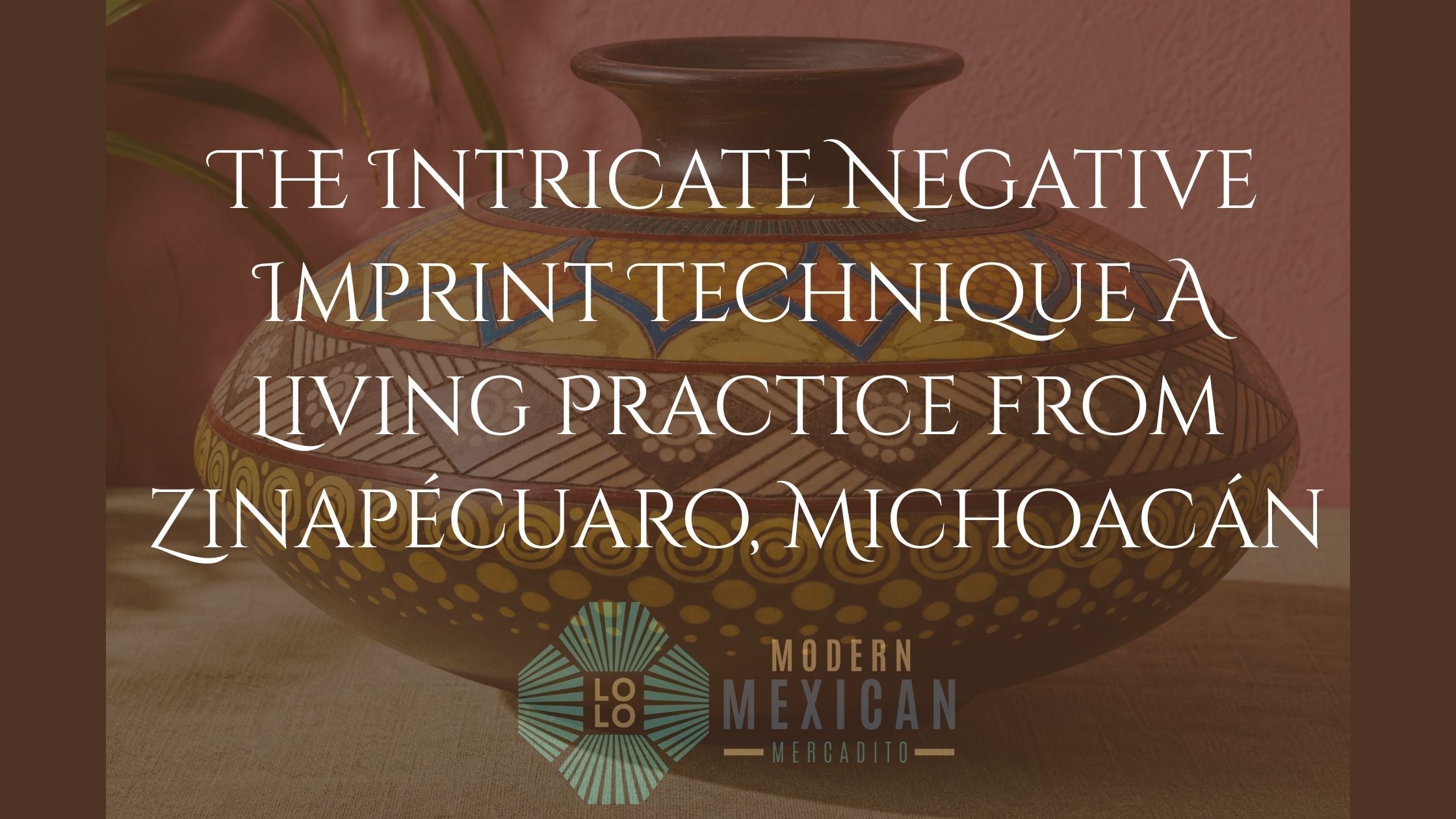
The process itself is layered and precise. Artisans begin by coating the clay with rich pigments, reds, blacks, earth tones, sometimes building up multiple washes. Then comes the resist: wax, plant resins, or animal fats are carefully applied to protect certain areas. During the firing, these materials melt away, disappearing into the heat. What remains is the design, etched through absence, revealed by fire.
Each vessel becomes a balance between control and surrender. The outcome cannot be rushed or forced, it must be guided.

At Taller Solís, this ancestral foundation evolves through Fernando’s own practice. His work often undergoes multiple firings, with the final imprint only appearing after the second transformation. It is in this moment that the piece fully reveals itself, when time, heat, and material align.
Fernando also works with smoke firing, a technique that demands deep understanding of temperature, timing, and airflow. Smoke becomes a drawing tool, wrapping the surface in shadow and depth. Working with fire in this way is not just technical, it is relational. It requires trust, experience, and an intimate dialogue with the elements.

Michoacán holds the legacy of the Purépecha people, and this lineage is present in every piece Fernando creates. His vessels are adorned with anthropomorphic figures, animal forms, and geometric patterns, spirals, lines, and symbols that echo landscapes, journeys, and ways of seeing the world.
These are not simply decorative choices. They are expressions of identity, of place, of stories carried through generations.

Across the Americas, similar techniques have appeared in different forms. In parts of Central America, for example, post-firing washes made from native plants transform the clay’s surface, revealing hidden designs. Though the methods vary, the intention remains connected: to use material and process as a way of understanding life, death, and transformation.

There is something deeply moving in the way these vessels come to life. The richness of the clay speaks to the earth, while the negative spaces, those areas where color has vanished, invite reflection. Some see in them a dialogue between presence and absence, between what is visible and what is felt.
Fernando’s work carries this balance. It is grounded in tradition, yet open to innovation. Rooted in family history, yet always evolving.
Each piece is a testament to time, to process, to the quiet beauty of techniques that continue to live through the hands of artisans.
We invite you to explore this collection from Zinapécuaro, Michoacán to experience ceramics where history, fire, and imagination meet. Pieces that hold not only form, but feeling.
By Diana Rodriguez